Shinzo Abe
International trips 2012-2020 (2nd term Prime Minister)
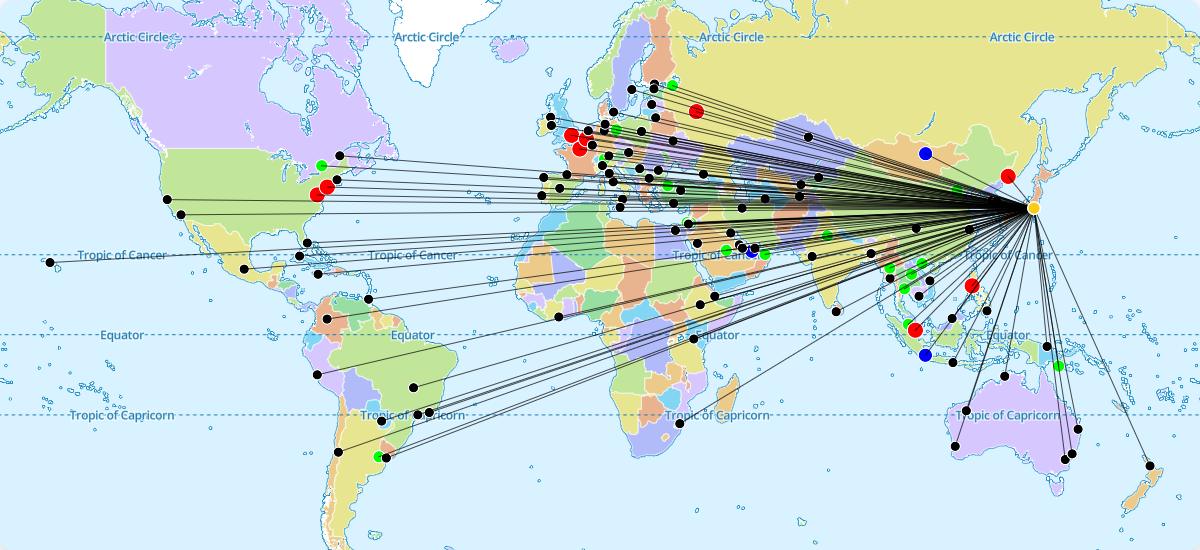
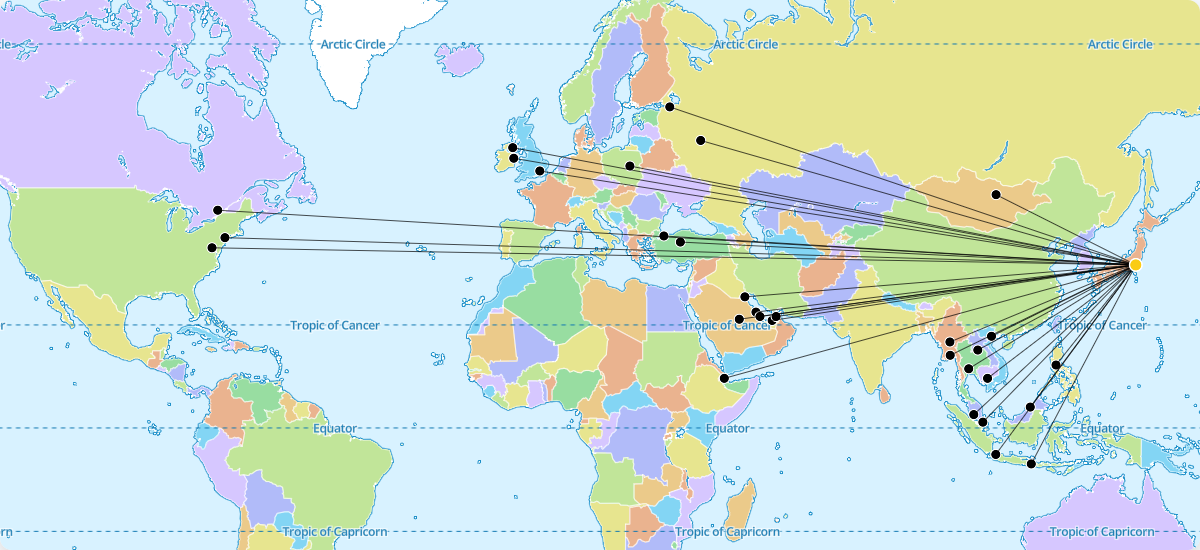
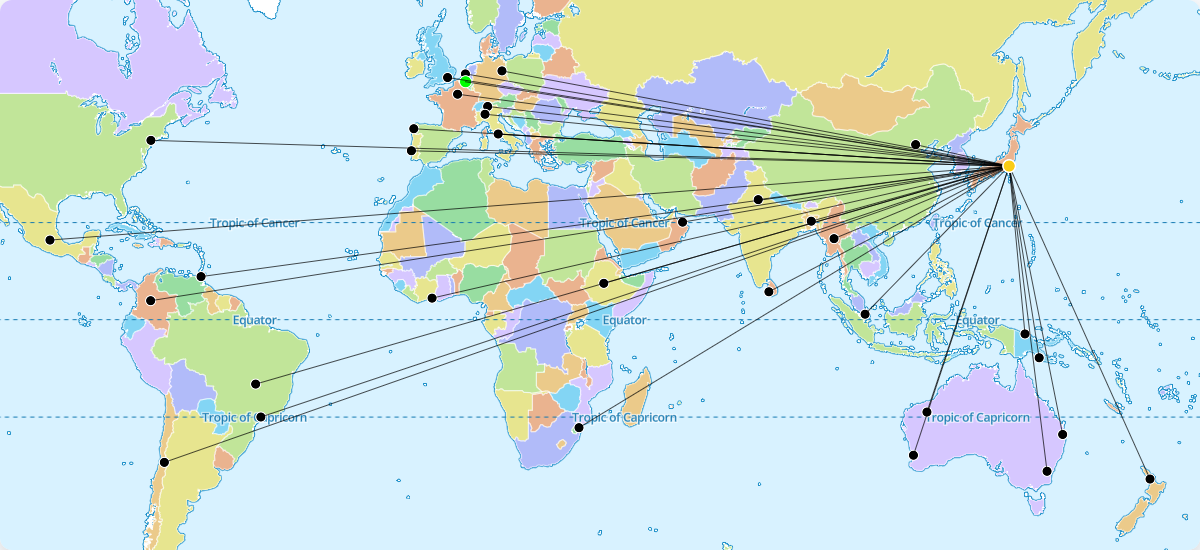
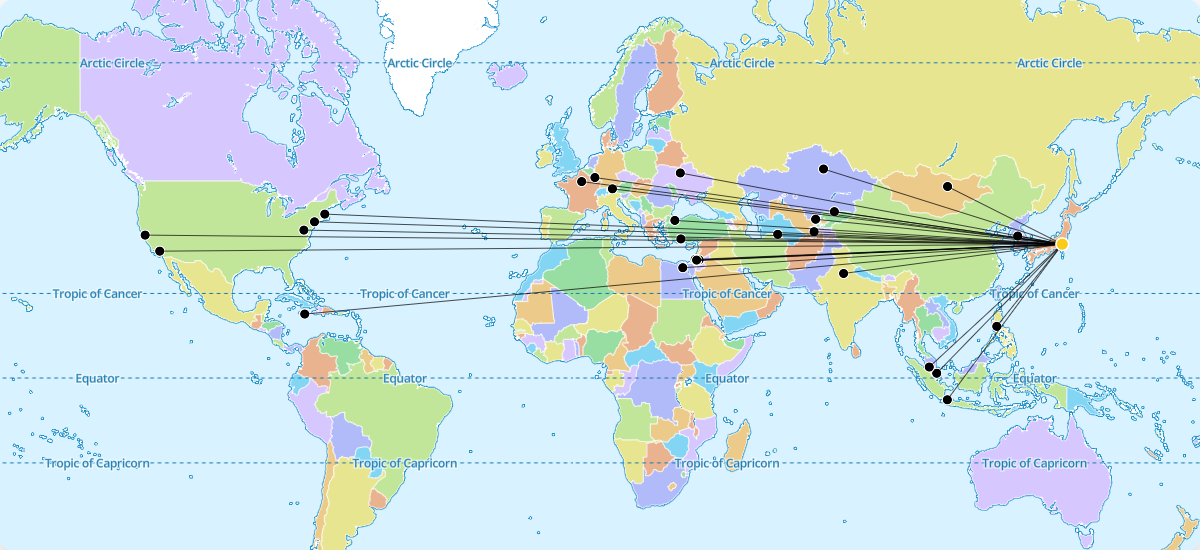
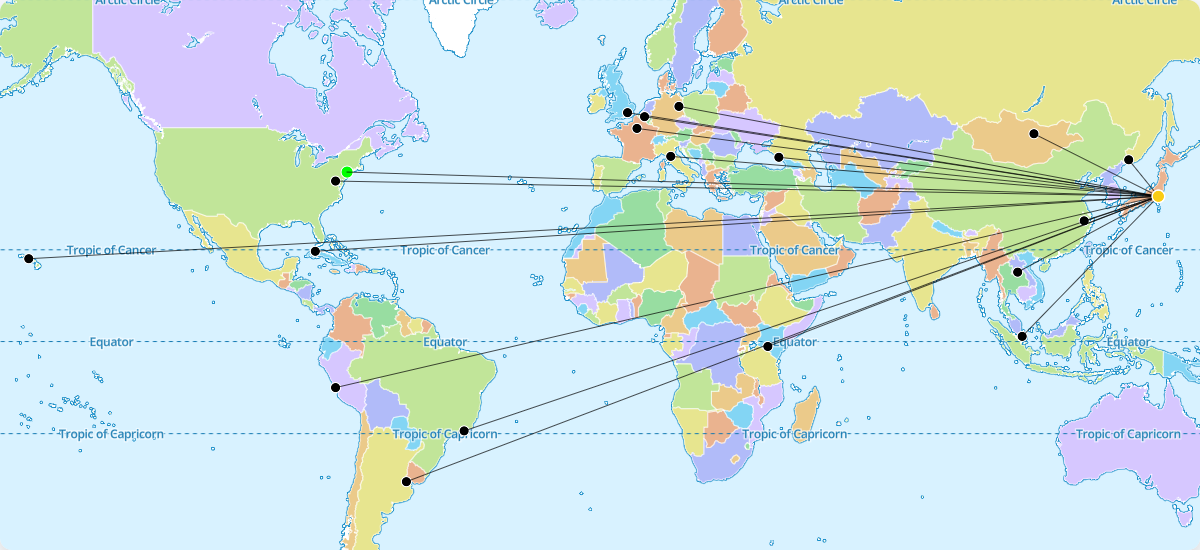
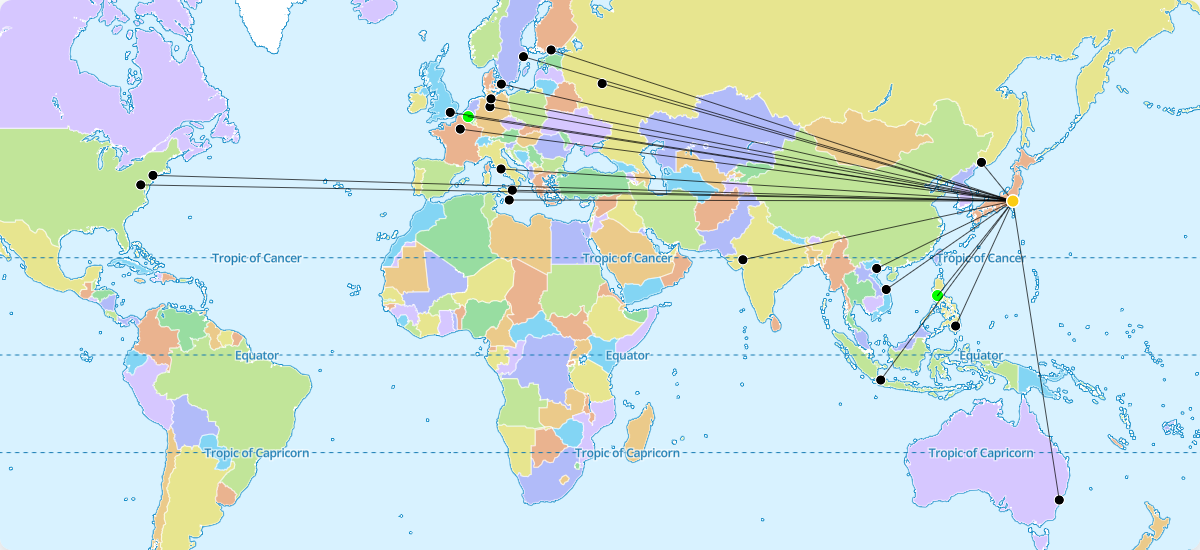
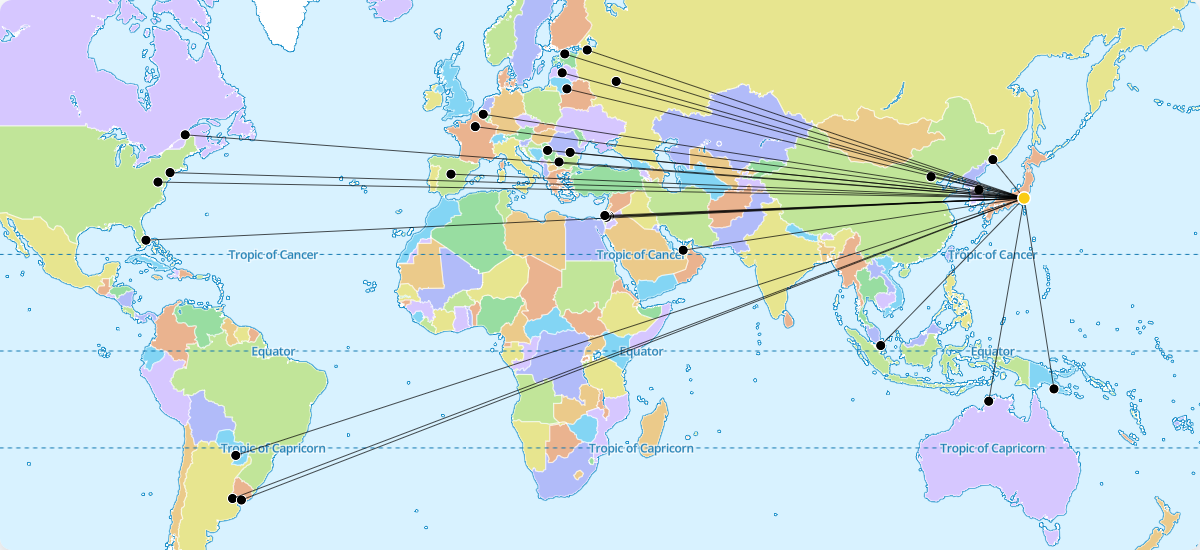
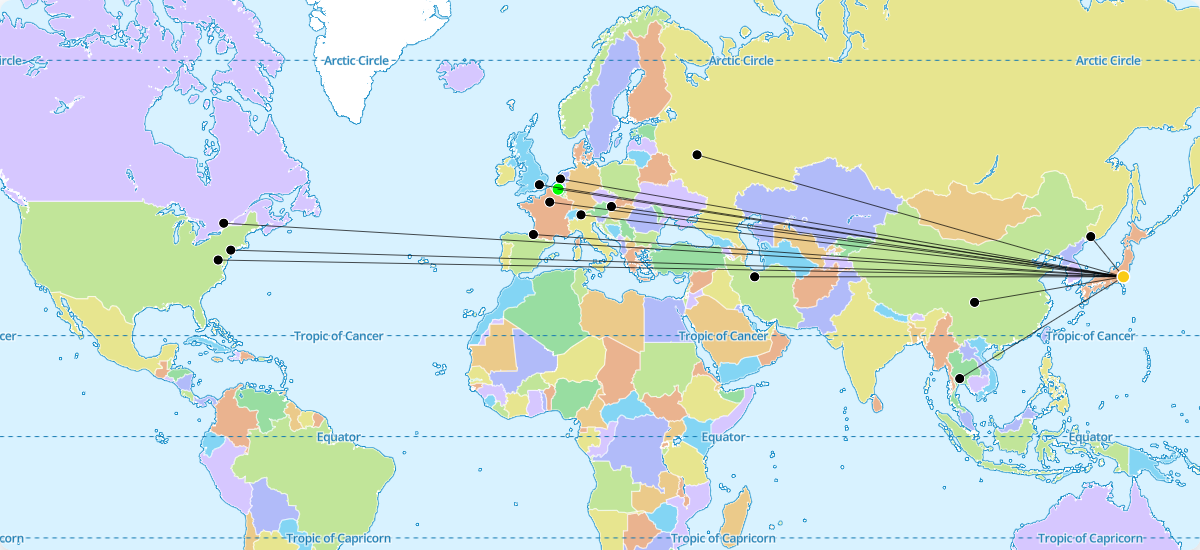
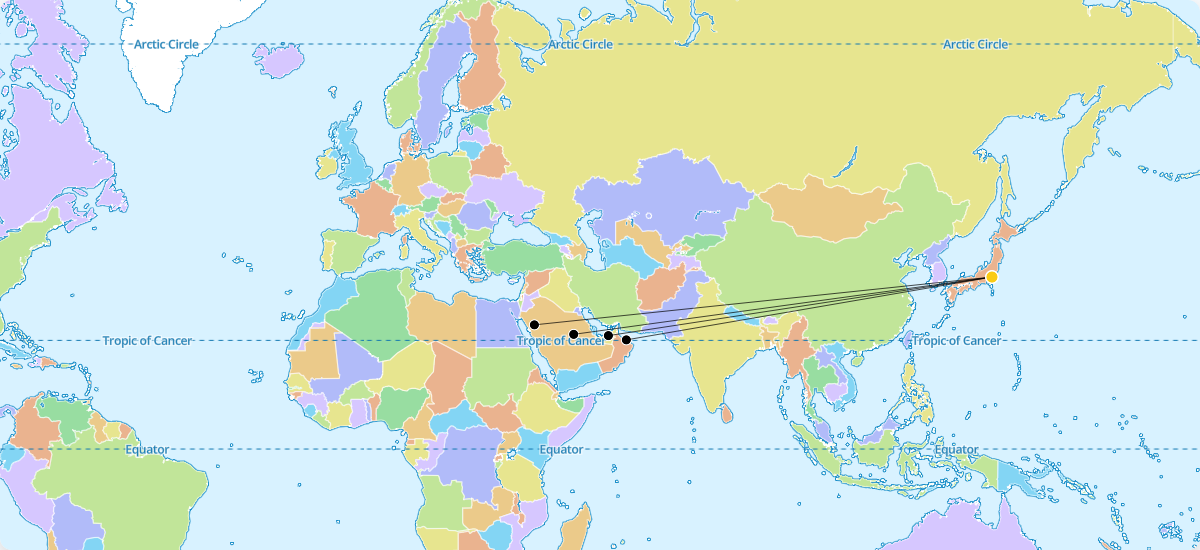
This page analyzes the travel activity of Shinzo Abe during the period of International trips 2012-2020 (2nd term Prime Minister). It shows which cities, countries, and regions were visited, how often travel occurred, and which locations were most important.
Based on recorded data, this dataset highlights travel patterns and frequently visited destinations, providing insight into movement across different regions and locations.
Where did Shinzo Abe travel during this period?
During this period, Shinzo Abe visited
80 countries and
189 cities across
6 continents.
The most frequently visited locations include key cities that played an important role in
international diplomacy and political meetings.
Shinzo Abe was a Japanese politician who served as Prime Minister of Japan and was one of the most influential leaders in the country’s postwar history. A member of the Liberal Democratic Party (LDP), Abe first became prime minister in 2006 and later returned to office in 2012, going on to become Japan’s longest-serving prime minister. He was known for his economic reform agenda, often referred to as “Abenomics,” and for pursuing a more proactive foreign and security policy. Abe played a central role in strengthening Japan’s alliances, particularly with the United States, and in expanding Japan’s presence in regional and global diplomacy.
This page focuses on the travel activity of Shinzo Abe and the locations visited during this specific period.
Travel facts: Shinzo Abe – International trips 2012-2020 (2nd term Prime Minister)
This includes official diplomatic visits and international meetings.
- Period: 2013-01-16 – 2020-01-14
- First stop: Hanoi, Vietnam
- Last stop: Muscat, Oman
- Continents visited: 6
- Countries visited: 80
- Cities visited: 189
During this period, Shinzo Abe visited 80 countries and 189 cities across 6 continents.
The data highlights key locations and frequently visited places, showing how travel activity was distributed geographically over time.
Shinzo Abe returned to office in 2012, beginning a second and historically significant term that lasted until 2020. His leadership was defined by the implementation of “Abenomics,” a set of economic policies aimed at stimulating growth through monetary easing, fiscal policy, and structural reforms. Internationally, Abe strengthened Japan’s strategic partnerships, promoted a “Free and Open Indo-Pacific” vision, and expanded Japan’s role in global diplomacy. His tenure also included security reforms that reinterpreted Japan’s constitutional framework regarding collective self-defense. Abe resigned in 2020 due to health reasons, concluding the longest continuous premiership in Japan’s modern history.
Which countries and cities did Shinzo Abe visit most?
The travel data shows clear differences in how often certain locations were visited. Some cities and countries appear multiple times, indicating repeated visits, while others were visited only once.
During this period, the most frequently visited city/territory was New York City with 8 visits, while United States ranks as the most visited country with 19 visits.
Other destinations include Brussels (8 visits) and Washington D.C. (6 visits), showing a mix of frequently visited locations and one-time stops.
Overall, Shinzo Abe visited 189 cities across 80 countries and 6 continents, reflecting the geographic scope of travel during this period.
For more details on the most visited cities by politicians, see Top Cities by Politicians.
While cities highlight key diplomatic hubs, the Top Countries by Politicians ranking reveals broader global travel patterns.